
Wet decks need more than a pretty finish. This guide shows how to specify slip-resistant textures, choose the right
rating method, and detail edges and drainage so poolside areas stay safe and durable for resorts, clubs, and
residential projects.
Poolside Safety Guide: Best Slip Ratings, Textures & Edge Details for Composite Decking
Why Poolside Decks Fail (and How to Avoid It)
- Over-smooth surfaces: glossy caps look great but lose grip when wet or soapy.
- Poor drainage: inadequate falls or blocked gaps create biofilm (algae) and soap residues.
- Sharp or exposed edges: unsafe transitions at pool copings and stairs.
- Wrong color/temperature: very dark tones get hotter and feel slicker when sunscreen is present.
Slip Testing: Know Your Methods
| Region/Use | Common Method | Typical Poolside Target* | Notes |
|---|---|---|---|
| UK/EU (shod traffic) | Pendulum (PTV, wet) | around ≥36 (project-specific) | Portable; sensitive to texture & contamination control. |
| EU (barefoot areas) | DIN 51097 (A/B/C) | B or C near pool edges | Barefoot ramp with soapy water; higher = better wet grip. |
| US (facility policies) | Wet DCOF (various procedures) | Follow owner/operator standard | Confirm method, lubricants, and acceptance criteria in spec. |
*Always confirm with local authority, insurer, and project safety plan.
Texture & Finish That Work Near Water
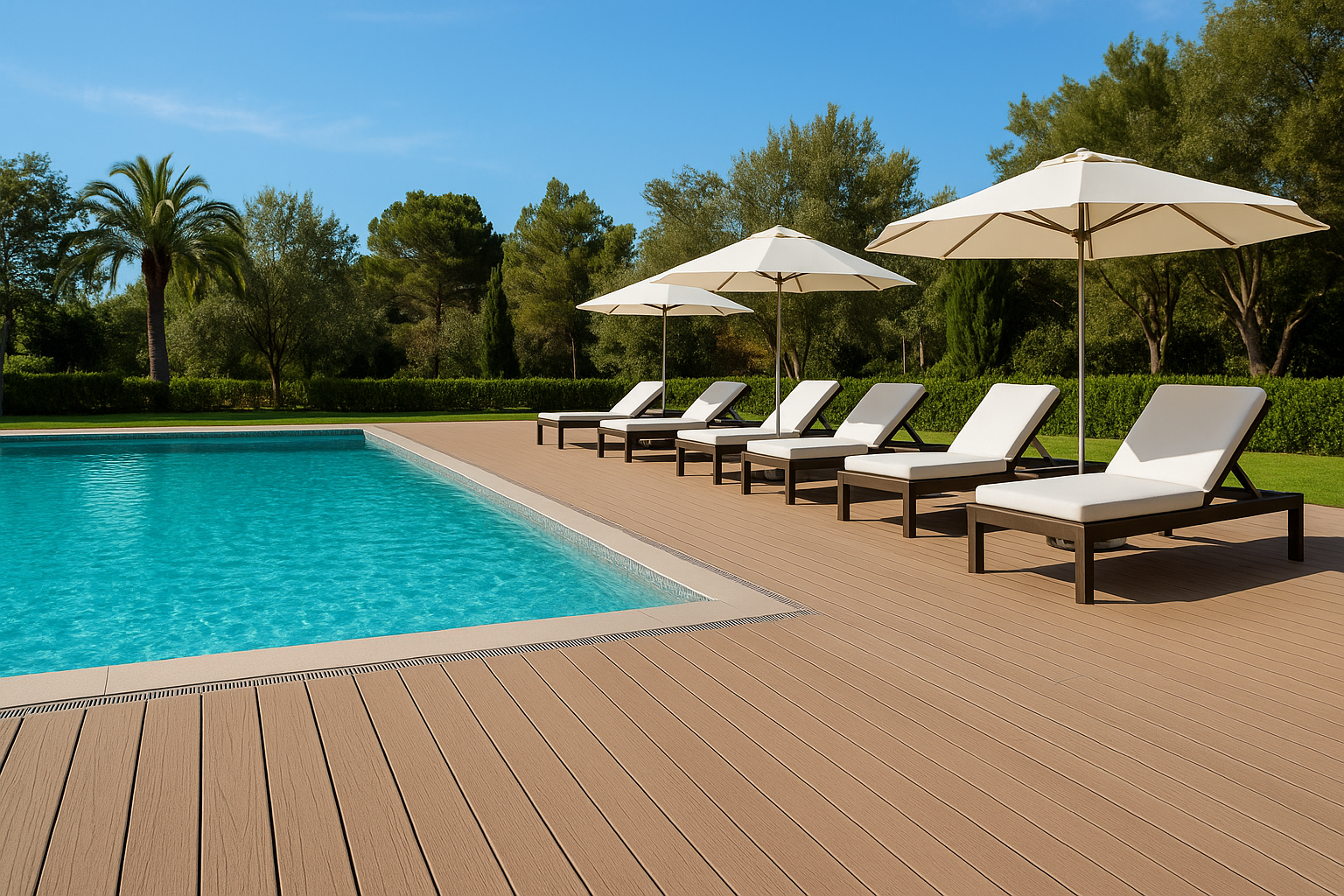
- Matte caps with open grain: reduce film build-up and glare; maintain tactile grip when wet.
- Fine micro-ridges: directional patterns improve water shedding across walking lines.
- Lighter, low-gloss colors: stay cooler under sun and show fewer water marks.
- Soft edges (radius/half-round): barefoot comfort without catching towels or swimwear.
Compare finishes and colors in our Ecosolid Decking Series and browse real resorts in the Project Gallery.
Edge Details: Copings, Stairs & Transitions
Pool Coping Interface
- Maintain a neat drip edge with a small chamfer/radius so water does not wick under caps.
- Use fascia or bullnose boards with concealed fixings; avoid exposed sharp corners.
- Respect expansion gaps to both coping stone and adjacent structures.
Steps & Platforms
- Highlight treads with contrast grain or groove orientation; keep nosing rounded.
- Provide consistent rise/run; integrate drainage slots at landings.
Thresholds & Grates
- Use drain channels parallel to the pool edge to catch splash back.
- Keep gaps uniform with hidden clips to prevent toe catches.
Drainage & Hygiene
- Falls: design 1–2% toward channels; keep outlets accessible.
- Ventilation: allow airflow under boards to dry structure after splash events.
- Cleaning: neutral-pH wash, soft brush along grain; rinse sunscreen and soap residues promptly.
See maintenance pointers in our FAQ.
Poolside Spec Checklist
- Declared wet slip rating (method stated) and maintenance plan to keep it.
- Texture (matte/open grain) and color (light to mid tones for heat control).
- Edge details (bullnose/fascia, rounded nosing, safe transitions).
- Drainage (falls, channels, gap control) and ventilation.
- Warranty that covers fade & stain in chlorinated/salty environments.
Recommended Products & Related Pages
- Composite Decking — Ecosolid Series
- All Products including
Grille Panel and
Wall Panels - Company background: About Us · Why CopoSurface · Sustainability · News
FAQ
Will matte textures be harder to clean?
No—use neutral-pH cleaners and a soft brush along the grain. Matte/open-grain caps resist soap film and maintain grip when rinsed regularly.
What color is best around a hot pool deck?
Lighter, low-gloss tones run cooler and preserve perceived grip. Avoid very dark colors in full sun unless shading is provided.
Can I run boards perpendicular to the pool edge?
Yes, but control gaps and consider a trim or bullnose to protect ends. Ensure drainage falls do not push water toward building thresholds.

