
Profiles, spans, fasteners, edges—most “failures” trace back to these four. If the board looks tough but the joist plan
ignores direction changes and drainage, did the material ever have a chance?
Decking Composite Boards: Sizes, Spans & Hidden Fasteners Explained (2026 Guide)
Board Profiles (and the trade-offs)
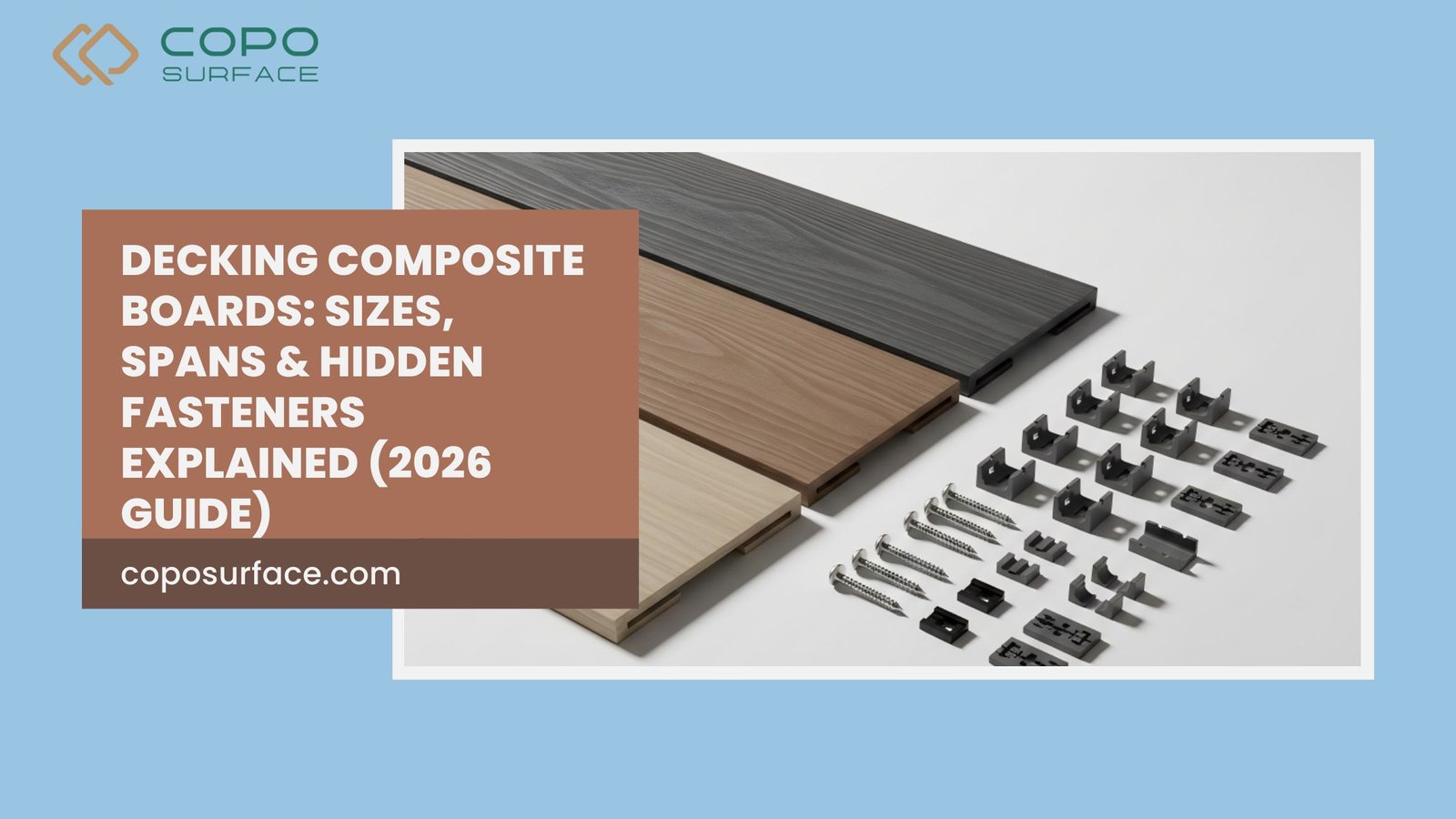
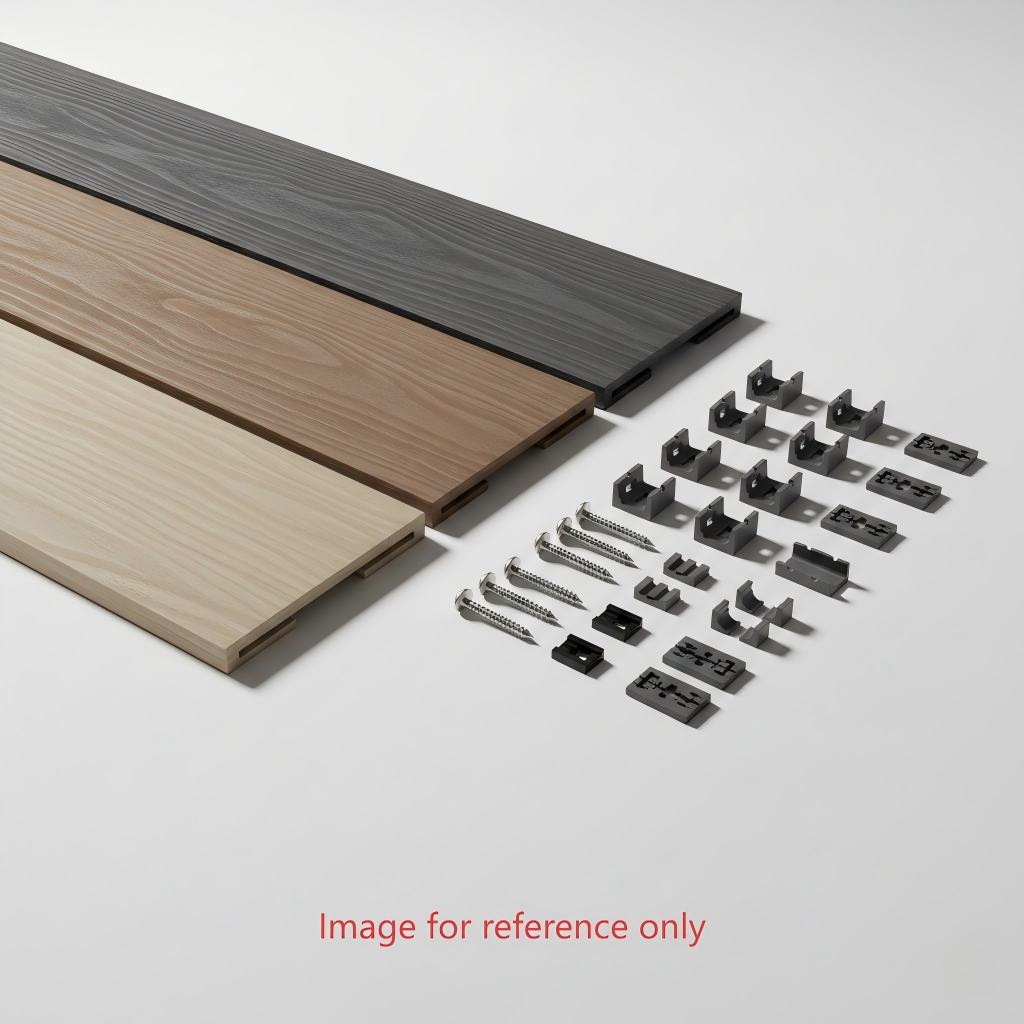
Grooved Edge (for hidden clips)
Clean surface, repeatable side gaps, faster install. If the site is windy, do you specify any locking clips near edges and ramps?
Square Edge (for face-fix or picture frame)
Useful at stairs/borders and custom edges. But what’s the plan to keep fastener heads tidy and water from pooling at trims?
See finishes and edges on Ecosolid Decking and installs in the Project Gallery.
Typical Sizes & Spans (always confirm datasheets)
| Item | Typical Range / Practice | Why it matters |
|---|---|---|
| Board width | ≈ 130–150 mm | Wider boards look seamless but can amplify movement if ventilation is poor. |
| Board thickness | ≈ 20–25 mm | Controls feel and span; stairs/ramps often need thicker, stiffer members. |
| Joist spacing (straight) | Often 300–400 mm centers* | Directional patterns and heavy point loads may need tighter spacing or blocking. |
| Joist spacing (diagonal/herringbone) | Reduce vs straight runs | Angle reduces effective span; is your layout actually drawn to scale? |
| Thermal movement | Use clip-controlled side gaps ≈ 4–6 mm; temp-based end gaps | End joints creep if gaps and ventilation are wishful thinking. |
*Numbers are indicative; always follow the product datasheet you purchase. Background on thermal expansion in polymers: overview.
Hidden Fasteners: clips, starters & locking strategy
- Standard clip: sets uniform side gaps and speeds install.
- Starter/end clip: for the first/last board; avoids face-fixing where you want a clean field.
- Locking clip: adds uplift resistance near edges, ramps, doors. If the deck is on a roof, do you specify where to lock rows?
- Stainless hardware: coastal sites benefit from periodic freshwater rinses after storms.
Edge Details: picture frame, bullnose & fascia
Picture Frame
Frames the field and hides cut ends. But will the frame choke drainage if a planter sits there next season?
Bullnose & Fascia
Comfortable for bare feet and clean visually. Remember ventilation behind fascia—can air actually move?
Drainage & Ventilation (quiet heroes)
- Falls: keep 1–2% gradient to channels; never block outlets with pedestals/joists.
- Airspace: maintain ≈ ≥50 mm under-deck ventilation; keep perimeter returns open.
- Cleanability: matte/open-grain textures shed films faster—will your contract name neutral-pH cleaning?
Wet slip background (methods and maintenance links): UK HSE overview here.
Rooftop & Balcony Notes
- Pedestals over membranes with rails or aluminum joists; keep linear drains accessible (no boxed-in outlets).
- Perimeter restraint for wind uplift; draw door thresholds and expansion breaks, don’t guess.
- Fire evidence should reference the assembly, not just a board-only claim.
See rooftop examples in the Project Gallery and product options at Ecosolid Decking.
FAQ (the questions people almost ask)
Do hollow vs solid boards change spans?
Profile geometry matters; follow the datasheet for the board you’ll buy. Diagonal runs typically require tighter centers.
Can I mix hidden clips and face-fix?
Yes for borders/stairs; keep a consistent gap visual and seal penetrations where required. Lock rows near edges or ramps.
What’s the fastest way decks lose wet grip?
Films from sunscreen/oils, blocked drainage, shaded algae growth. Matte/open-grain + neutral-pH cleaning helps maintain targets.

