
Building in tropical or desert regions? This guide breaks down how an ASA cap layer protects composite decking
from harsh UV, heat cycling, and discoloration—plus what architects, contractors, and facility managers should
check in real specifications before approving a board.
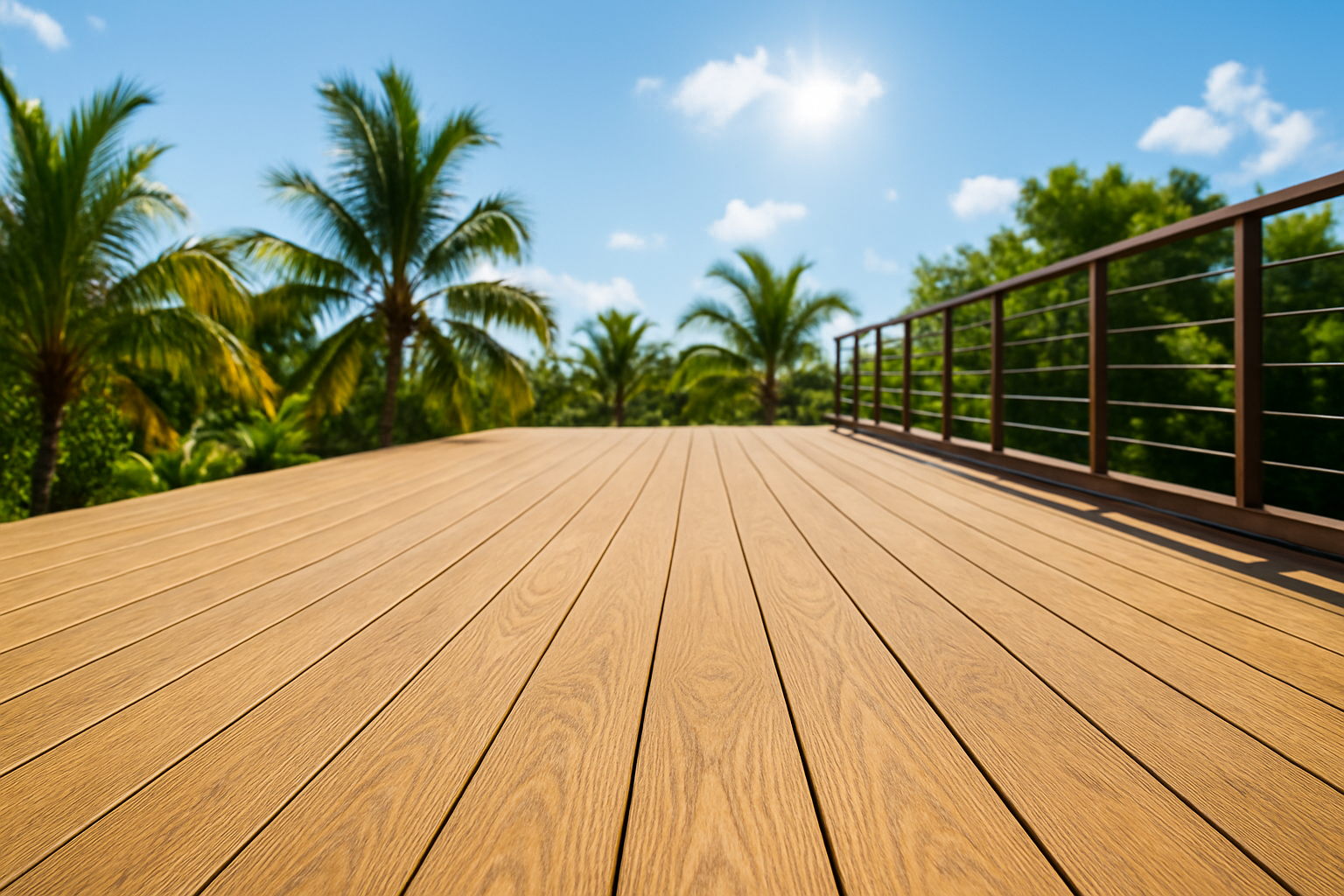
What Makes an ASA-Capped Deck Board Different?
An ASA (Acrylonitrile Styrene Acrylate) cap is a weatherable polymer layer co-extruded over the
composite core. Compared with uncapped or basic PE/PP capping, ASA offers superior color fastness, gloss
retention, and chalking resistance under long-term UV and heat exposure.
- UV stability: pigment protection and resin chemistry reduce fading in intense sun.
- Thermal resilience: ASA tolerates heat cycling, helping mitigate warping and surface brittleness.
- Color & texture fidelity: natural, matte textures stay closer to the original tone over time.
Hot-Climate Risks & How ASA Helps
1) Color Fade & Chalking
In tropical and arid zones, aggressive UV can bleach pigments and create a chalky film. ASA’s weatherable matrix
slows pigment degradation and resists chalking, keeping the deck visually consistent across seasons.
2) Heat Cycling & Dimensional Stability
Repeated expansion/contraction across day–night cycles can induce creep around fasteners and gaps. While subframe
design matters (joist spacing, vents, expansion gaps), an ASA cap protects the wear layer so micro-cracks and
hairline surface defects are less likely to propagate.
3) Moisture + Heat = Mold Pressure
Tropical humidity accelerates bio-growth. A dense ASA skin reduces micro-porosity in the wear layer, making routine
cleaning more effective and slowing staining.
Spec Checklist for Architects & Buyers
Ask vendors to provide objective data, not marketing adjectives. Minimum items to request:
- UV aging test (e.g., ISO 4892-2 or equivalent), with ΔE color change after defined exposure hours.
- Slip resistance with wet values relevant to poolside/rooftop usage (see your local standard).
- Fire classification according to your region (e.g., EU EN 13501-1; US/ASTM E84).
- Water absorption & swell figures for the board/core.
- Cap thickness & composition clearly stating ASA content and layer thickness tolerance.
- Warranty terms that explicitly mention fade & stain coverage in hot climates.
For subframe design and spans, see our installer notes in the
FAQ and the
Ecosolid Decking Series page.
ASA vs. Uncapped vs. Standard Capped Boards
| Property | Uncapped Composite | Standard PE/PP Cap | ASA-Capped Composite |
|---|---|---|---|
| UV Fade Resistance | Low–Medium | Medium | High |
| Color/Gloss Retention | Low | Medium | High |
| Chalking Resistance | Low | Medium | High |
| Heat Cycling Tolerance | Medium | Medium | High |
| Maintenance Frequency | Higher | Medium | Lower |
Comparative ratings are directional; verify actual test reports and warranty language before approval.
Use Cases in Hot & Coastal Regions
- Resort pool decks: wet slip ratings, cool-touch textures, rounded edges.
- Rooftops & balconies: lighter colors with ASA cap to reduce heat buildup.
- Coastal boardwalks: UV, salt spray, and footfall abrasion over long seasons.
See real applications in our Project Gallery.
Recommended Products
Care & Maintenance in High-Sun Regions
Even with ASA caps, routine care protects ROI: prompt rinse after salty spray, neutral-pH cleaning, soft-bristle
brushing along the grain, and avoidance of solvent cleaners. For full guidance, check our
FAQ.
FAQ
How do I confirm a board is truly ASA-capped?
Request documentation stating cap chemistry and thickness, plus UV aging test data (ΔE after defined hours) and fade warranty wording.
Will an ASA cap make the deck “cool to touch”?
Color and texture dominate surface temperature. Light, matte finishes with ASA caps help reduce heat perception versus dark glossy tones.
What if my project needs specific fire/smoke ratings?
Ask for region-specific fire classification (e.g., EN 13501-1 in EU or ASTM E84 in US) and ensure subframe/build-up does not change compliance.

