
Designing balconies and rooftops with composite decking? This guide summarizes the key checks for structural load,
fire classification, slip resistance, drainage, and maintenance so architects, contractors, and facility managers
can specify with confidence.
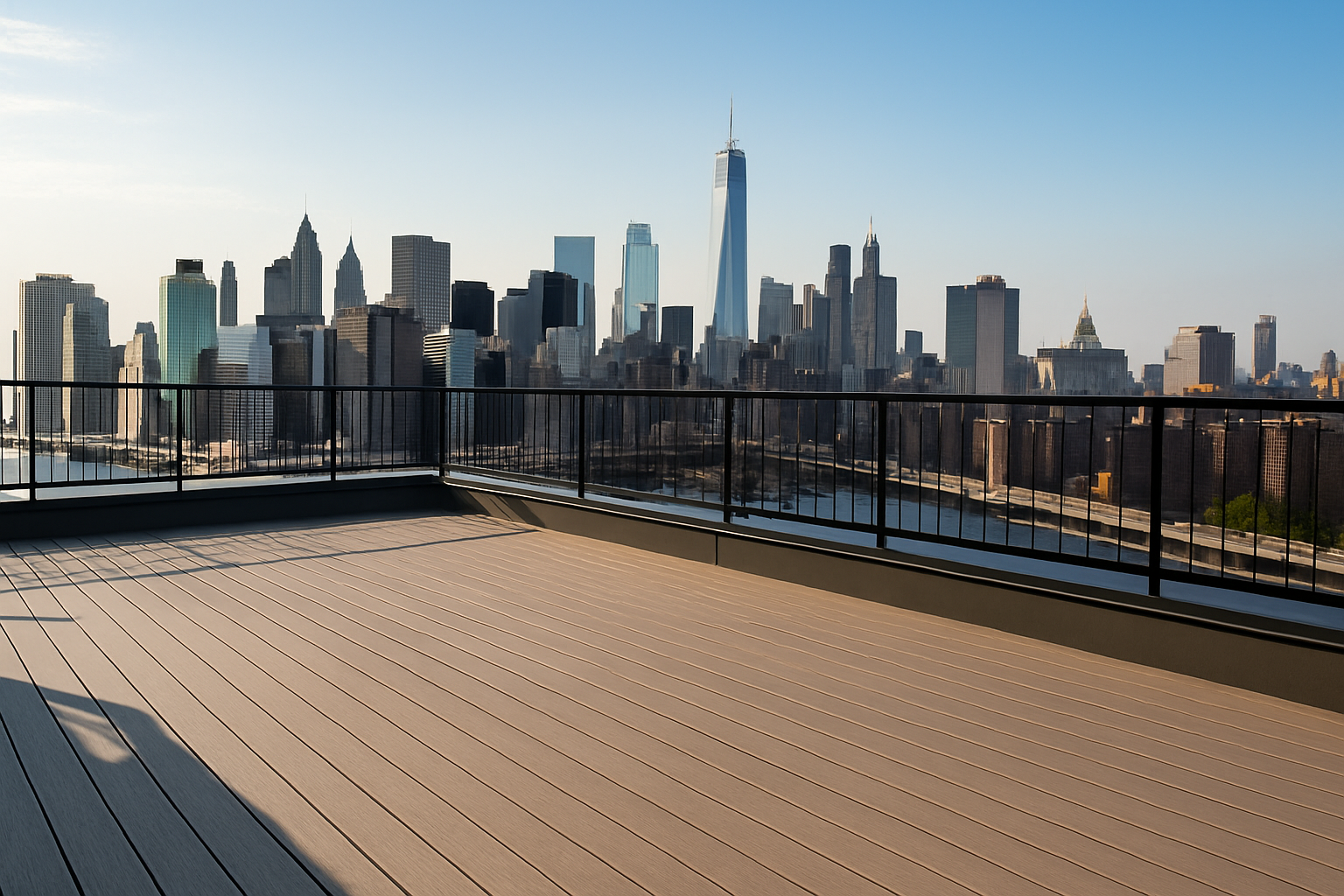
Balcony & Rooftop Projects: Composite Decking Load, Fire & Slip Standards Explained (EU/UK/US)
1) Structural Load on Balconies & Rooftops
Composite decking sits within a build-up that may include pedestals, joists, acoustic mats, insulation, membranes, and edge restraint.
Verify the primary structure capacity with your engineer, then confirm the deck system’s allowable spans and point loads.
- Live load & point load: check regional requirements (residential vs. assembly terraces). Ensure joist spacing and spans meet the board manufacturer’s datasheet.
- Weight per m²: deck board density + subframe + pedestals. Lightweight composite solutions help where slab capacity is tight.
- Movement & gaps: allow thermal expansion, perimeter clearances, and drainage paths around upstands and door thresholds.
For subframe spacing and fixing types, see our FAQ and
Ecosolid Decking Series pages.
2) Fire Classification (At-a-Glance)
Balconies and rooftops often have stricter requirements than ground-level decks. Always confirm local code and project fire strategy.
Typical references include:
- EU/UK: classifications referenced against EN 13501-1 for reaction to fire (e.g., performance similar to Efl/Bfl for flooring applications). Balconies can be subject to project-specific constraints—follow the fire engineer’s guidance.
- US: surface burning characteristics commonly assessed with ASTM E84 (flame spread/smoke). Assemblies may also need additional roof/deck system tests depending on use and height.
Fire performance depends on the whole build-up (decking, pedestals, membranes, insulation, edge details). Confirm tested assemblies and written approvals.
3) Slip Resistance for Wet & Exposed Areas
Rooftops and balconies see frequent wetting and soiling. Specify a texture and rating method relevant to your region:
- UK/Europe: widely used pendulum test methods report PTV (wet), with many specifiers targeting values typically ≥36 (project dependent). Ramp tests may reference DIN 51130 (R ratings, shod) or DIN 51097 (A/B/C, barefoot).
- US: many facilities reference wet dynamic coefficient of friction (DCOF) as part of internal policies; verify with the owner/operator’s standard.
Factors that improve performance: matte textures, open grain, water-shedding profiles, correct fall to drains, and routine cleaning.
4) Drainage, Uplift & Perimeter Detailing
- Falls & outlets: maintain clear drainage channels; avoid blocking with joists or pedestals. Use spacer clips to keep gaps consistent.
- Wind uplift: on exposed roofs, use positive fixings and perimeter restraint. Maintain free edges with trims or fascia that do not obstruct drainage.
- Door thresholds: respect weathering upstand/threshold rules; consider aluminum trays/drainage mats to protect membranes.
- Acoustics: where required, introduce resilient layers under subframes to reduce impact noise to the space below.
5) Material Choice: Why Composite for Balconies?
- Dimensional stability: engineered spans and consistent profiles reduce call-backs.
- Weathering: UV- and stain-resistant cap options keep color closer to the original tone.
- Maintenance: periodic cleaning only—no repainting, oiling, or sealing cycles.
Explore finishes in our Ecosolid Decking Series and see completed rooftops in the Project Gallery.
Quick Spec Checklist
| Category | What to Ask For |
|---|---|
| Structure | Board span tables, joist spacing, pedestal load limits, fastener pull-out, total system weight per m². |
| Fire | Reaction-to-fire classification for the deck board and tested assembly evidence for rooftop/balcony build-ups. |
| Slip | Wet slip values using your chosen method (e.g., pendulum PTV wet; ramp ratings for shod/barefoot where applicable). |
| Weathering | UV aging and color change data (ΔE), cap chemistry, stain-resistance notes, cleaning guide. |
| Details | Edge trims, perimeter restraint, drainage paths, door thresholds, wind uplift strategy. |
| Warranty | Terms that explicitly cover fade/stain and rooftop/balcony usage where relevant. |
Recommended Products & Related Systems
- Composite Decking — Ecosolid Series
- All Products including
Grille Panel and
Wall Panels - Read our About Product insights and latest News.
FAQ
Can I float a deck over a waterproofed roof?
Yes, with compatible pedestals and a ventilated subframe that preserves drainage. Avoid penetrating the membrane and follow the membrane supplier’s details.
What wet slip value should I target?
Follow the project’s safety plan. Many UK/EU balcony specs look for wet pendulum PTV around 36 or above; confirm with your authority and insurer.
How do I control wind uplift on high-rise roofs?
Use mechanical restraint at perimeters and fixings through rails/joists as per engineer guidance. Keep free edges protected with trims while maintaining drainage.

